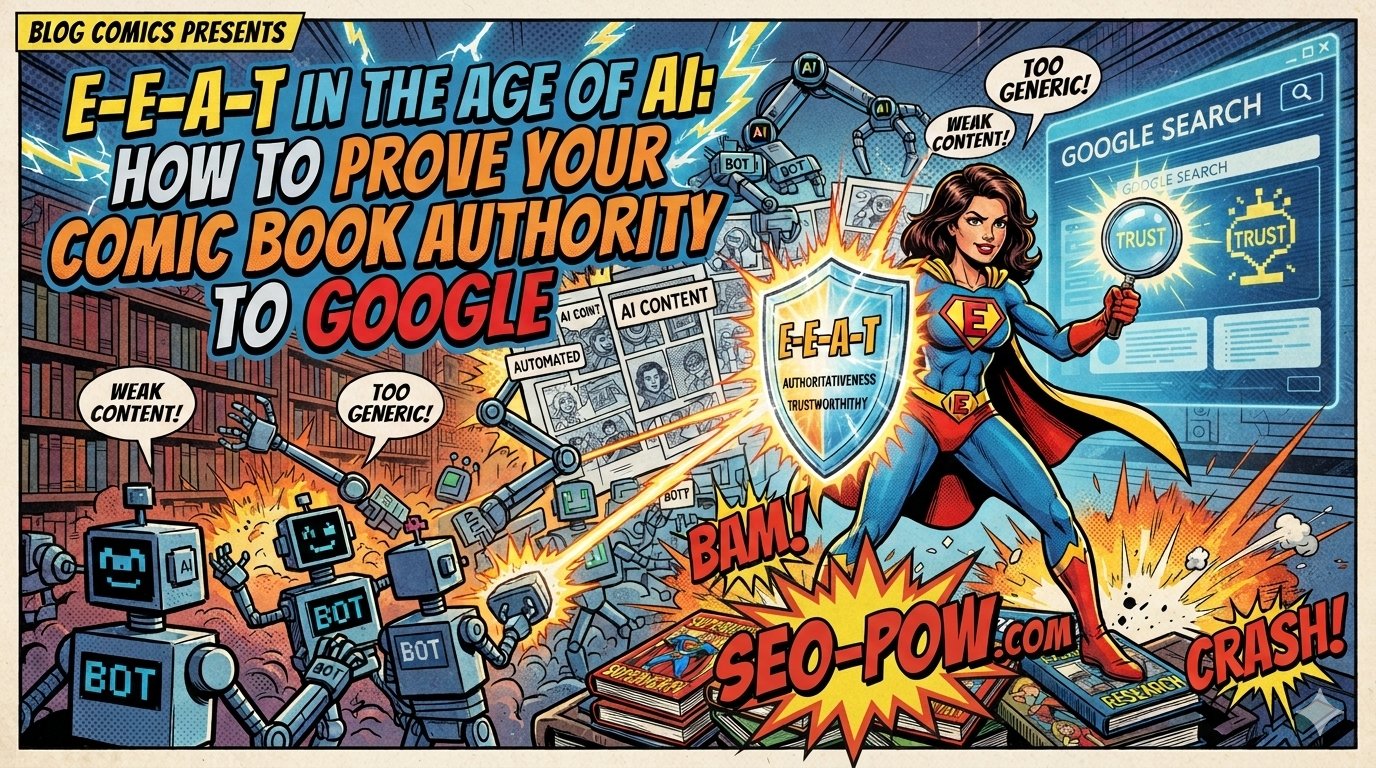
IN THE
AGE OF AI
In the world of comic book collecting, there is a massive difference between a casual fan who just watched a superhero blockbuster and a seasoned collector who can spot a counterfeit first-appearance book from across a crowded convention floor.
Google knows this. As Artificial Intelligence floods the internet with millions of generic, automated articles, search engines are working harder than ever to reward true, human expertise. For comic book sites, pop culture blogs, and speculation platforms, the secret to surviving this new era comes down to four letters:
If you want your comic book website to rank on Google today, you cannot just publish generic summaries that AI could write in three seconds. You have to prove you live and breathe the hobby. Here is how.
Google uses a massive network of human search quality evaluators to grade websites based on their Quality Rater Guidelines. While E-E-A-T is not a direct, single algorithm ranking factor, Google trains its core algorithms to recognize and reward these specific traits.
For comic creators, this is a massive win. Highlighting that genuine, hands-on experience is the one power move AI cannot copy.
- Stop using stock images. Take original photos of your collection, convention hauls, and grading defects that only you own.
- Write in first-person. Share your personal journey tracking down variant covers and local comic shop visits.
- Embed original unboxing and grading videos from your own mail calls and weekly pulls.
- Share live reactions, real convention floor stories, and genuine collector moments AI cannot fabricate.
- Write granular speculation: shifting creative teams, print run impacts, and back-issue pricing trends.
- Always credit writers, pencilers, inkers, colorists, and letterers by name in every article you publish.
- Give every author a bio that explains their history and specialization inside the hobby.
- Dominate a specific niche: Bronze Age horror, modern indie variants, or key issue tracking.
- Write content so thorough that major news sites and community forums link to you as a reference.
- Interview local shop owners, indie creators, and cover artists to elevate your site’s credibility.
- Pick a lane and own it completely. Consistent niche coverage builds deep Google trust over time.
- Be the absolute authority in your specific category and leave no room for competitors.
- State affiliate disclosures at the top of every relevant post. No exceptions, ever.
- Clearly explain your pricing methodology and exactly where your data originates.
- Maintain accessible About, Contact, and Privacy Policy pages on your site at all times.
- Be a named, accountable entity — not a faceless, anonymous content farm.
Does the rise of E-E-A-T mean you should banish AI entirely? Absolutely not. Smart comic SEOs use AI as an assistant, not a replacement. Know the difference:
| ✓ USE AI FOR THIS | ✗ AVOID THESE AI TRAPS |
|---|---|
| Generating article outlines, structures, and keyword research ideas | Publishing raw AI output without editing or fact-checking |
| Brainstorming catchy titles for pull-list reviews and speculation posts | Relying on AI for accurate comic market pricing history |
| Proofreading grammar and optimizing your meta descriptions | Letting AI write reviews for comics it has never actually read |
| Handling repetitive admin tasks so you focus on real human content | Treating AI-generated output as finished, publishable work |
In the age of AI, authenticity is your superpower. Anyone can prompt a chatbot to write a generic article. Only a true collector can explain how a landmark comic event felt in real time, detail the specific variant differences that shift value, and break down how it permanently changed the speculation landscape.
The AI tools cannot smell the newsprint. They cannot feel the crinkle of a mylar bag. They cannot tell you which booth at the convention had the best deals. That is your edge. Use it.
POW! ★ END OF ISSUE ★